Saudi Work Visa Document Translation: Degree, Contract and Name-Matching Guide
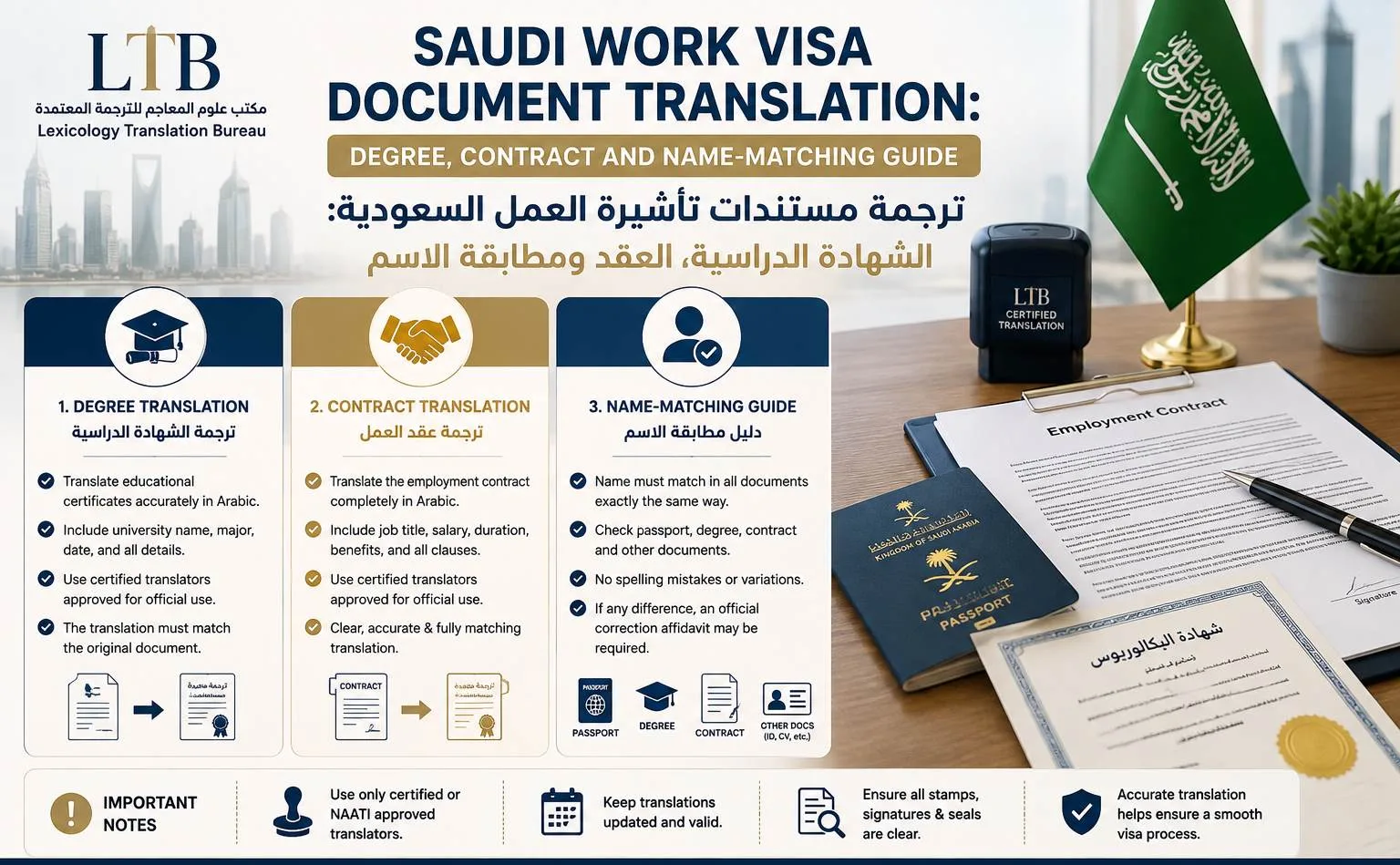
A practical guide to document translation for Saudi work visa applications, covering degree certificates, employment contracts, experience certificates, professional documents, passport-name matching and pre-submission checks.
Saudi Work Visa Document Translation Guide
A Saudi work visa process may involve documents issued in different countries and languages. Depending on the profession, employer and receiving authority, applicants may need translated academic, employment or professional records.
Translation is only one part of the process. The employer, Saudi embassy, Ministry of Foreign Affairs, Ministry of Human Resources and Social Development, professional body or another receiving authority decides which documents and procedures are required.
Applicants should therefore confirm the latest requirements with the relevant authority before arranging translation or attestation.
Which Documents May Need Translation?
The required documents vary according to the applicant’s occupation, nationality and place of application. Common examples include:
- Degree or diploma certificates
- Academic transcripts
- Employment contracts or job offers
- Experience certificates
- Professional licences or registrations
- Training and technical certificates
- Police clearance certificates
- Medical documents
- Marriage or family documents, when requested
- Supporting company or personal records
A document already issued in the language accepted by the receiving authority may not require translation. Always verify the requirement before ordering the service.
Degree and Academic Certificate Translation
Qualification title
The translated qualification must accurately reflect the title printed on the original certificate. A translator should not upgrade, simplify or reinterpret the academic level.
For example, a diploma, bachelor’s degree and master’s degree should remain clearly distinguished.
University and institution names
The official English or Arabic name of the university should be used when it is available. If no official version exists, the institution’s name may need careful transliteration.
Academic transcripts
A transcript translation may include:
- Student name
- University and faculty
- Programme title
- Course names
- Credit hours
- Grades
- Grade-point average
- Graduation date
- Stamps and signatures
Tables should remain easy to compare with the source document.
Matching the Job Title and Qualification
The occupation stated in a visa, employment contract or employer request may need to be supported by the applicant’s education and experience.
Translation does not determine whether a qualification is suitable for a particular occupation. However, inconsistent terminology can create avoidable questions.
Before submission, compare the translated job title across the:
- Employment contract
- Visa or authorisation record
- Degree certificate
- Experience certificates
- Professional registration
- Passport and application forms
If the documents use different but legitimate titles, applicants should ask the employer or receiving authority which wording is required.
Passport Name Matching
Name inconsistency is one of the most important issues to check.
The English spelling used in translated documents should normally match the applicant’s current passport. Review:
- Given name and family name
- Order of names
- Initials
- Spaces and hyphens
- Previous passport spellings
- Arabic-to-English transliteration
- Date and place of birth
The translator should not silently change information contained in the original. When names differ between documents, the applicant may need additional supporting evidence or instructions from the receiving authority.
Employment Contract Translation
An employment contract translation may contain:
- Employer and employee information
- Job title
- Workplace
- Contract duration
- Salary and allowances
- Working hours
- Leave provisions
- Probation period
- Duties and responsibilities
- Termination clauses
- Signatures and dates
Numbers, currencies and dates require special attention. The translated version should preserve the meaning of the original contract without adding legal interpretations.
Experience Certificate Translation
Experience certificates may support the applicant’s professional history. Check that the translation correctly records:
- Employer name
- Employee name
- Position
- Employment start and end dates
- Duties
- Department
- Full-time or part-time status
- Signature, stamp and contact details
Job-title terminology should remain consistent with the other application documents whenever the originals permit it.
Professional and Regulated Occupations
Healthcare, engineering and other regulated professions may require additional classification, registration or verification.
A certified translation does not replace:
- Professional classification
- Licence verification
- Qualification verification
- Employer approval
- Embassy procedures
- Attestation or Apostille
- Government approval
Applicants should consult the relevant Saudi professional authority for profession-specific requirements.
Translation, Attestation and Apostille Are Different
These procedures serve different purposes:
Certified translation
A translated version prepared and certified according to the requirements of the receiving party.
Attestation
Confirmation of a document or signature through designated authorities.
Apostille
A certification used between countries participating in the Apostille Convention, where applicable.
A translated document is not automatically attested, and an attested original is not automatically translated. The correct order may depend on the issuing country and receiving authority.
Pre-Submission Checklist
Before submitting work-visa documents, check that:
- Names match the current passport
- Passport number is correct
- Dates are complete and consistent
- Qualification titles are accurately translated
- Job titles are consistent
- Every page has been translated
- Stamps, seals and handwritten notes are addressed
- Tables and grades remain readable
- The required certification has been added
- Attestation requirements have been confirmed
- Scans are clear and complete
- The latest instructions have been checked with the authority
How to Request Translation
To request a translation, provide:
- Clear scans of every page
- The source and target languages
- The intended receiving authority
- A passport copy for name spelling, when appropriate
- The required delivery date
- Any authority-specific instructions
Sharing the intended use helps the translator review terminology and formatting more effectively.
Final Advice
Work-visa document requirements are not identical for every applicant. Prepare documents according to the employer, occupation, issuing country and receiving authority.
Accurate translation can help prevent inconsistencies in names, qualifications, dates and job titles. It does not guarantee visa issuance, professional classification, attestation or acceptance.
For current procedures, consult the relevant official Saudi authority before submission.
Official sources for current requirements
Receiving-organization requirements can change. Check the relevant official source before submitting a document.
Frequently Asked Questions
Do all documents for a Saudi work visa need translation?
No. Translation requirements depend on the language of each document and the instructions of the employer, Saudi embassy, professional authority or other receiving body. Confirm the current requirements before arranging translation.
Should names in translated documents match the passport?
The English spelling of the applicant’s name should normally match the current passport. Differences in spelling, name order or spacing should be identified and reviewed before submission.
Is certified translation the same as document attestation?
No. Certified translation, document attestation and Apostille are separate procedures. A translated document is not automatically attested, and an attested original is not automatically translated.