Technical Manual Translation in Riyadh: User Guides, Specifications and Maintenance Documents
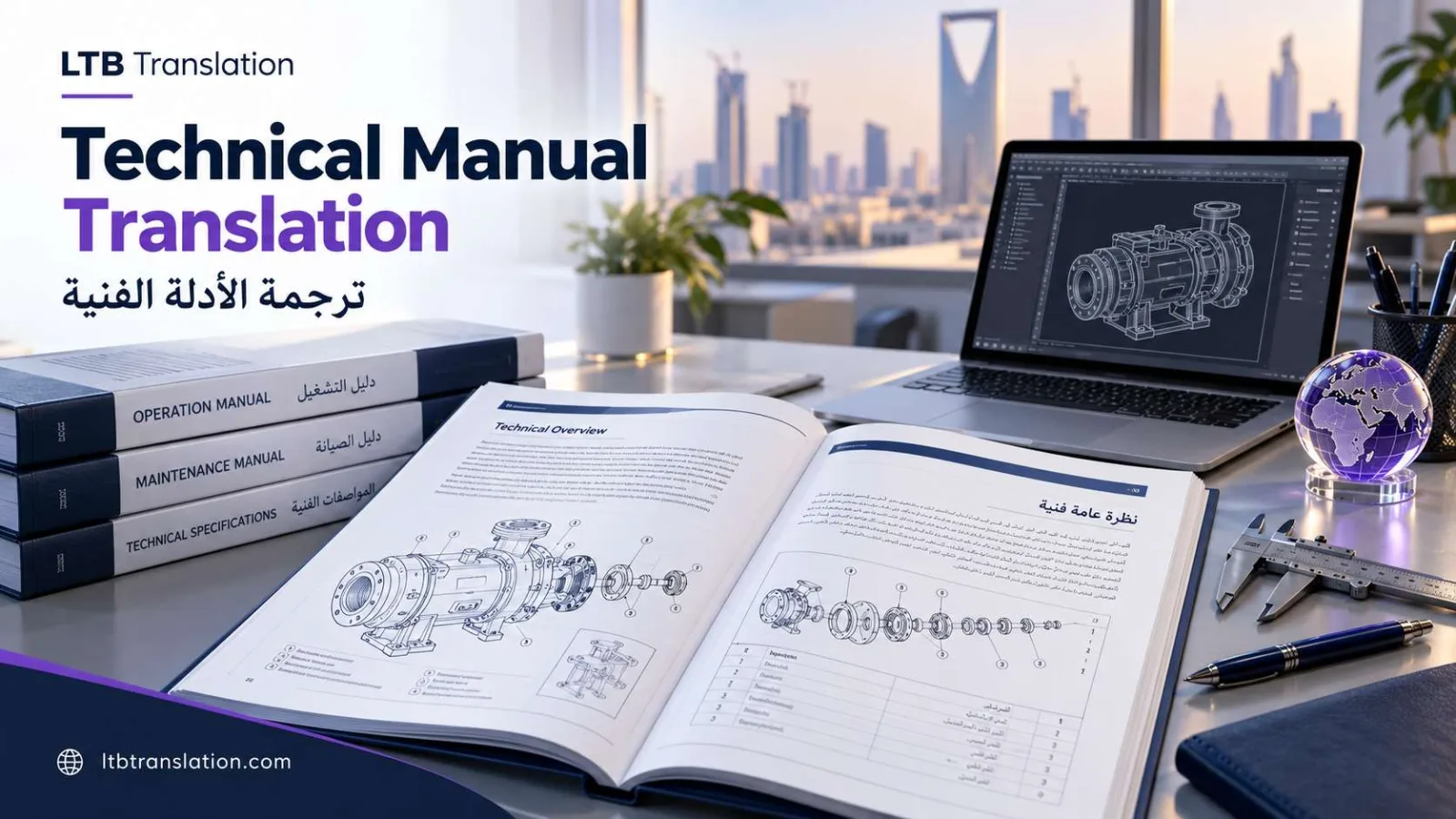
Need technical manual translation in Riyadh? Learn how to prepare user guides, equipment specifications and maintenance documents for Arabic-English translation, with careful checks of terminology, measurements, diagrams and document versions.
Technical manual translation in Riyadh helps businesses communicate equipment instructions, product specifications and maintenance information across languages. A useful translation must preserve the technical meaning while making instructions clear for the intended reader.
Whether you are preparing an Arabic user guide or translating maintenance documents into English, the starting point is a complete, legible and correctly identified source document.
What Documents Can Be Included?
Technical translation projects may include:
• Equipment installation and operating manuals.
• Product specifications and technical data sheets.
• Preventive maintenance schedules.
• Troubleshooting guides.
• Spare-parts lists and component descriptions.
• Inspection checklists and technical reports.
• Diagram labels, tables and equipment notices.
Identify the documents and sections required before requesting a quotation. If you need only part of a manual, include any referenced pages needed to understand that section.
Preparing Your Files for Translation
Provide the latest approved version of the manual, including its document number, revision date and relevant attachments. Editable source files are useful when the translated document must retain tables, diagrams and page design.
For scanned documents, send clear copies with all page edges visible. Small print, symbols and diagram labels must be readable. Photographs of incomplete pages can leave important instructions without context.
Explain who will use the translation: operators, maintenance technicians, procurement staff or customers. The audience helps determine appropriate terminology and how unfamiliar abbreviations should be handled.
Reviewing Technical Terms and Product References
A single component should have a consistent name throughout the manual. Supply any approved glossary, previous translations or manufacturer terminology available for the project.
Model numbers, part numbers and product codes should be checked against the original. These identifiers should not be rewritten as ordinary words.
Where a term has several possible meanings, the surrounding instructions and equipment context should guide the translation. An unresolved ambiguity should be raised for clarification rather than silently guessed.
Checking Numbers, Units and Instructions
Technical review should pay particular attention to:
• Decimal values and numerical ranges.
• Measurement units and their symbols.
• Positive and negative signs.
• Tolerances, dimensions and quantities.
• Step numbering and cross-references.
• Warnings, conditions and exceptions.
Unit conversion is a separate task from translation. Do not assume that a measurement should be converted unless this is agreed in the project instructions and the converted value is checked.
The translation should preserve the meaning and sequence of the source instructions. If the original appears inconsistent, flag the issue for the document owner instead of changing it without approval.
Arabic Layout, Tables and Diagrams
Arabic text reads from right to left, while model numbers, codes and many technical expressions may need left-to-right presentation. Review mixed-language lines carefully so that identifiers and values remain readable.
Diagram labels should stay connected to the correct components. Tables should preserve the relationship between headings, values and units. Page references and the table of contents may need updating if the translated layout changes.
Agree in advance whether delivery should be a translated text file, an editable formatted document, a PDF or a bilingual version.
Translation Scope and Technical Approval
A translation review checks how accurately the target text represents the source. It does not replace engineering approval, product testing or the manufacturer's verification of operating instructions.
If the document will be submitted to a customer or organization, ask that recipient about its language, formatting and certification requirements before work begins.
Requesting a Technical Translation Quote
To request a quotation from Lexicology Translation Bureau (LTB), provide the complete files, source and target languages, intended use, required delivery format and preferred deadline.
Mention any diagrams requiring editing, approved terminology and specialist review requirements. These details help define the scope and support a realistic quotation.
Frequently Asked Questions
Can a scanned technical manual be translated?
Yes, if the text, symbols and diagrams are readable. A clearer copy or editable source file may be needed for small labels or complex layouts.
Will model numbers and measurement units be changed?
They should be preserved accurately from the source. Any requested unit conversion or localization should be agreed separately and checked.
Can the translation include tables and diagram labels?
Yes, these can be included in the agreed scope. Editable artwork may be needed to reproduce complex diagrams clearly.
Does translating a manual confirm that the equipment is compliant?
No. Translation does not establish product conformity, engineering approval or regulatory acceptance. Those matters require the relevant technical assessment.
Official sources for current requirements
Receiving-organization requirements can change. Check the relevant official source before submitting a document.
Frequently Asked Questions
Can a scanned technical manual be translated?
Yes, if the text, symbols and diagrams are readable. A clearer copy or editable source file may be needed for small labels or complex layouts.
Will model numbers and measurement units be changed?
They should be preserved accurately from the source. Any requested unit conversion or localization should be agreed separately and checked.
Can the translation include tables and diagram labels?
Yes, these can be included in the agreed scope. Editable artwork may be needed to reproduce complex diagrams clearly.
Does translating a manual confirm that the equipment is compliant?
No. Translation does not establish product conformity, engineering approval or regulatory acceptance. Those matters require the relevant technical assessment.