Why Do Foreign-Language Documents Need Arabic Translation in Saudi Arabia?
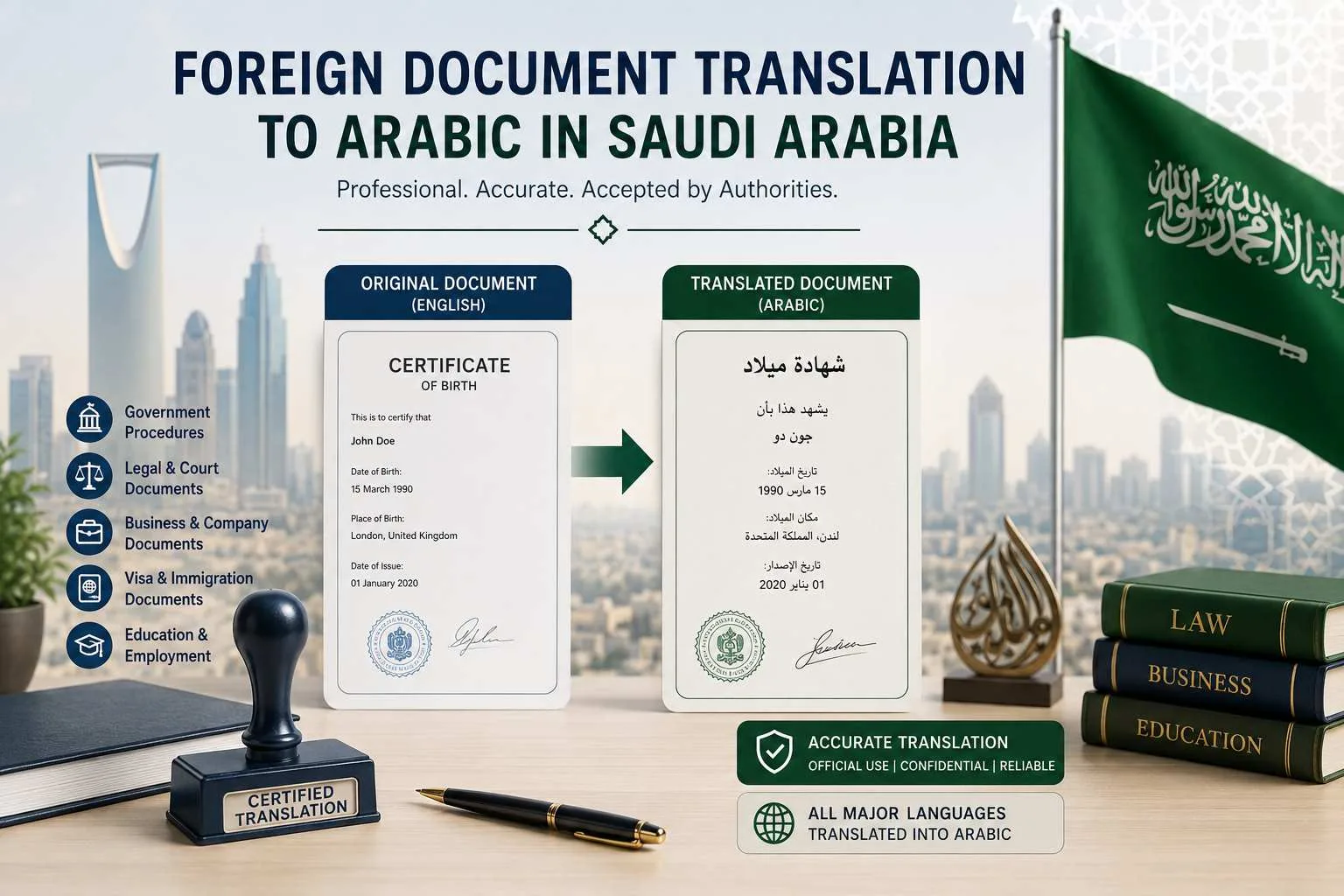
Documents issued in English, Urdu, Bengali, Hindi, French, Turkish, or other languages may need Arabic translation when they are used in Saudi Arabia. Learn why accurate Arabic translation matters for government procedures, legal matters, business, visas, education, employment, and official document submission.
Why Is Arabic Translation Important in Saudi Arabia?
Saudi Arabia is an international destination for workers, families, students, investors, companies, and visitors from many countries. As a result, many people arrive with documents written in languages other than Arabic.
These documents may include passports, birth certificates, marriage certificates, educational certificates, employment contracts, bank statements, medical reports, powers of attorney, commercial documents, and other official records.
Arabic is the official language of Saudi Arabia, and official procedures may require documents to be presented in Arabic or accompanied by an Arabic translation depending on the authority and purpose.
When May You Need to Translate a Foreign Document into Arabic?
Government and Official Procedures
People may need Arabic translations when submitting foreign-language documents to government bodies, public institutions, or other official organizations in Saudi Arabia.
The exact requirement depends on the authority and the type of document. It is important to check the receiving authority's current requirements before ordering a translation.
Legal and Court Documents
Legal documents require especially careful translation because a small wording difference can change the meaning of a name, date, obligation, legal status, or contractual clause.
Professional legal translation is important for contracts, powers of attorney, affidavits, judgments, and other legal records.
Business and Company Documents
Foreign companies operating in Saudi Arabia may use documents originally prepared in English or another language.
Depending on the purpose, businesses may require Arabic translations of:
- Commercial registrations
- Articles of association
- Contracts
- Commercial invoices
- Certificates
- Board resolutions
- Company correspondence
- Financial documents
Visa, Immigration and Family Procedures
Foreign residents and visitors may need translations of personal and family documents when completing certain visa, residency, immigration, marriage, birth, or family-related procedures.
Common examples include marriage certificates, birth certificates, police clearance certificates, educational certificates, and other supporting documents.
Education and Employment
Students and professionals from other countries often hold academic and employment documents in their original language.
Arabic translation may be required or useful for:
- Degree certificates
- Academic transcripts
- Experience certificates
- Employment contracts
- Salary certificates
- Training certificates
- Professional qualifications
Why Professional Arabic Translation Matters
Accurate Names and Personal Information
Names should be translated or transliterated consistently according to the document and its intended official use.
Errors in a person's name can create problems when comparing a translated document with a passport, national ID, residence document, or other records.
Correct Dates, Numbers and References
A professional translator should carefully verify dates, identification numbers, passport numbers, company registration numbers, certificate numbers, addresses, monetary amounts, percentages, and official references.
A single digit or date error can cause unnecessary delays.
Proper Legal and Technical Terminology
Legal, medical, financial, academic, and commercial documents contain specialized terms.
A direct word-for-word translation may not communicate the intended meaning correctly. Professional translation requires terminology that fits the context of the document.
Clear Formatting and Document Structure
An official translation should make it easy to compare the translated content with the original.
Titles, tables, seals, signatures, headings, stamps, and important references should be handled carefully so that the translation remains clear and professional.
Which Languages Can Be Translated into Arabic?
Arabic translation services may be needed for documents originally written in many languages, including English, Urdu, Bengali, Hindi, French, Turkish, Persian, Russian, Spanish, German, Chinese, and other languages.
The language combination is only one part of the process. The type of document and its intended official use are equally important.
What Should You Check Before Ordering an Arabic Translation?
Confirm the Receiving Authority
First determine where you will submit the translated document.
A government authority, court, embassy, university, bank, employer, or private company may have different requirements.
Check Whether Certification Is Required
Not every document requires the same level of certification or authentication.
Before ordering the translation, confirm whether you need certified translation, attestation, legalization, apostille, embassy-related processing, or additional supporting documents.
Make Sure the Original Document Is Clear
A translator needs a readable copy of the original document.
Blurred scans, missing pages, cropped stamps, or unclear signatures can create translation problems.
Check Names Against Official IDs
Before finalizing the translation, compare personal names and important identity details with the passport or other official identification documents.
Why Choose a Professional Translation Office?
A professional translation office can help reduce mistakes in important documents and provide a translation suitable for the intended purpose.
For legal, medical, financial, business, academic, and government-related documents, accuracy is more important than simply converting words from one language into another.
Final Thoughts
If you have a document written in another language and need to use it in Saudi Arabia, Arabic translation may be an important step.
The safest approach is to identify the receiving authority, confirm its current document requirements, and use an experienced translation provider for documents that require accuracy, certification, or official use.
Lexicology Translation Bureau provides professional multilingual translation services in Riyadh for legal, business, academic, personal, medical, and other document types.
Official sources for current requirements
Receiving-organization requirements can change. Check the relevant official source before submitting a document.
Frequently Asked Questions
Why may a foreign-language document need Arabic translation in Saudi Arabia?
Because Arabic is the official language of Saudi Arabia, and some authorities may require or accept official documents in Arabic for specific procedures.
Which foreign documents commonly need Arabic translation?
Common examples include certificates, contracts, legal documents, academic records, medical reports, financial documents and personal-status documents.
Is every foreign document required to be translated into Arabic?
No. Requirements depend on the receiving authority, document type and intended purpose.
Do I need certified translation?
This depends on the authority and procedure. Always confirm whether certified translation, attestation or another form of legalization is required.
.png.webp)